The biblical character Moses

|
| A scene from the Biblical Moses fable of the Torah, and for those who are wondering why I use a brown skin Moses: It's pretty apparent Europeans (Caucasians) didn't dwell in the Nile valley during the so-called days of the Moses fable; additionally, Exodus 4:6 states that God turned Moses' skin "leprous as snow (White) and then returned it to its normal color (Brown)." |
Peace and greetings. I hope these words will greet you in the kindest of manner. This topic, The etymology of Mesu (Moses), has been either overlooked or wholly dismissed in favor of half-truths and supplanted fables with no physical evidence. The purpose of this thesis is to not sway you from your spiritual truths but only to state the absolute facts. Let these validated truths stand upon their merit, and let your soul stand upon its own light.
The age of Semitic Morphology vs. the age of ancient Egyptian language
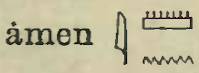
The Egyptian language is older than any Semitic language. Moreover, several Egyptian words like Amen, Horus, and Ptah are used in the Semitic language family. Egyptologists and Semitists concur that the genetic relation between Egyptians and Semitic is based on morphological evidence.
According to a study on non-Semitic loanwords in the Hebrew Bible, approximately 64% of the 235 loanwords identified in the Hebrew Bible come from non-Semitic languages. Of these loanwords, 135 are from Egyptian.
Source:
(1) Non-Semitic Loanwords in the Hebrew Bible: a Lexicon of Language .... https://docslib.org/doc/4306832/non-semitic-loanwords-in-the-hebrew-bible-a-lexicon-of-language-contact.
(2) Loanwords in Biblical Hebrew - Biblical Archaeology Society. https://www.biblicalarchaeology.org/daily/loanwords-in-biblical-hebrew/.
(3) Egyptian Loanwords as Evidence for the Authenticity of the Exodus and .... https://bibleinterp.arizona.edu/sites/bibleinterp.arizona.edu/files/docs/Noonan.pdf.
(4) Linguistic Dating of Biblical Texts | Bible Interp. https://bibleinterp.arizona.edu/articles/yount357913.

The Biblical Moses


The Egyptian Moses

|

|
| The Egyptian symbol mes means "born of" or "brought forth by." |


|
| Mes: 322A/322B |
Here are some of the royal attributes associated with MES (: Born Of).


|


Meskhenit

|
| In ancient Egyptian theology, Meskhenet was the goddess of childbirth. |

|
| Meskhenet merged with a "birthing stone" |

|
Seqnenre Tao II


|
| Queen AhHotep |

|
| Signet ring of Queen AhHotep |
Sampling of "Mes" in The Egyptian King's List
17th Dynasty

|
| Kamose |

|
|
Kamose (Spirit Born)
|
18th Dynasty (Ahmose I)

|
| Ahmose l |

|
| Pharaoh Ahmose I |

|
| A ring of Ahmose, which may also read Mes-Iah (Messiah) |

|
| Signet ring of Ahmose I |

|
| Mes-Iah (Messiah?) |

|
| Thutmose 1: Thoth is Born |

|
| Thutmose II |

|
| Thutmose III |

|
| Thutmose IV |

|
||
| Tut: Horus Name: Ka nakht tut mesut The strong bull, pleasing of birth. |
19 Dynasty

|
| Ramesses: Born of Ra |

|
| Ramesses II |
20th Dynasty

|
| Ramesses III |

|
| Ramesses IV |

|
| Ramesses V |

|
| Rameses VI |

|
| Rameses VII |

|
| Rameses VIII |

|
| Rameses IX |

|
| Rameses X |

|
| Rameses XI |
 |
| Rameses XII |
The Exodus
.jpeg)
|
| Ahmose I |
The Tempest Stela

|
| The Tempest Stela of Ahmose. Reconstruction of the face. |
The Tempest Stela, also known as the Storm Stele, is an ancient Egyptian artifact erected by Pharaoh Ahmose I in the early 18th Dynasty of Egypt around 1550 BCE. The stele describes a great storm that struck Egypt, destroying the Theban region's tombs, temples, and pyramids. The stele also describes the restoration work ordered by the kin. The part of the stele that describes the storm is the most damaged part of the stele, with many lacunae in the meteorological description.
The Tempest Stela was discovered in pieces in the 3rd pylon of the temple of Karnak at Thebes between 1947 and 1951 by French archaeologists. It was restored and published by Claude Vandersleyen in 1967 and 1968. The stela consists of a single text in horizontal lines, copied on both sides of a calcite block that once stood over 1.8 meters tall. The side of the stela, termed the ‘face’ or ‘front side,’ had horizontal lines painted red, with incised hieroglyphs highlighted in blue pigment. The reverse face, or back, was unpainted.
The Tempest Stela is an important historical artifact that provides insight into ancient Egyptian history and meteorology. It is a testament to the power of nature and how it can impact human civilization.
The Ten Commandments

|
| A mock stock photo of the 10 Commandments in Hebrew |
- The Code of Hammurabi is one of history's oldest and most complete written legal codes. It was created by King Hammurabi of Babylon around 1750 BC. The code consists of 282 laws that cover various aspects of life, such as crime, family, trade, and social justice. The code also includes a famous principle of "an eye for an eye, a tooth for a tooth" as punishment. Some of the laws in the code are similar to the Ten Commandments, such as "You shall not murder," "You shall not steal," "You shall not bear false witness," and "You shall not covet your neighbor's wife."
- The Code of Ur-Nammu: This is the oldest known law code in the world. It was written by King Ur-Nammu of Ur, a city-state in ancient Mesopotamia, around 2050 BC. The code consists of 57 laws that deal with civil and criminal matters, such as theft, murder, divorce, and inheritance. The code also introduces the concept of a fair trial and a presumption of innocence for the accused. Some of the laws in the code are similar to the Ten Commandments, such as "You shall not kill," "You shall not commit robbery," "You shall not commit adultery," and "You shall not slander."
- The Egyptian Book of the Dead: This is a collection of spells, prayers, and rituals used by ancient Egyptians to guide the souls of the dead through the afterlife. It dates back to around 2600 BC and was written on papyrus scrolls buried with the mummies. The book contains a chapter called "The Negative Confession," which lists 42 sins the deceased had to deny before the judgment of Osiris, the underworld god. Some of the sins in the list are similar to the Ten Commandments, such as "I have not killed anyone," "I have not stolen," "I have not lied," and "I have not coveted my neighbor's goods."

|
| The 42 Negative Confessions likely inspired the creation of the 10 Commandments. |
Did Moses Cross the Red Sea?
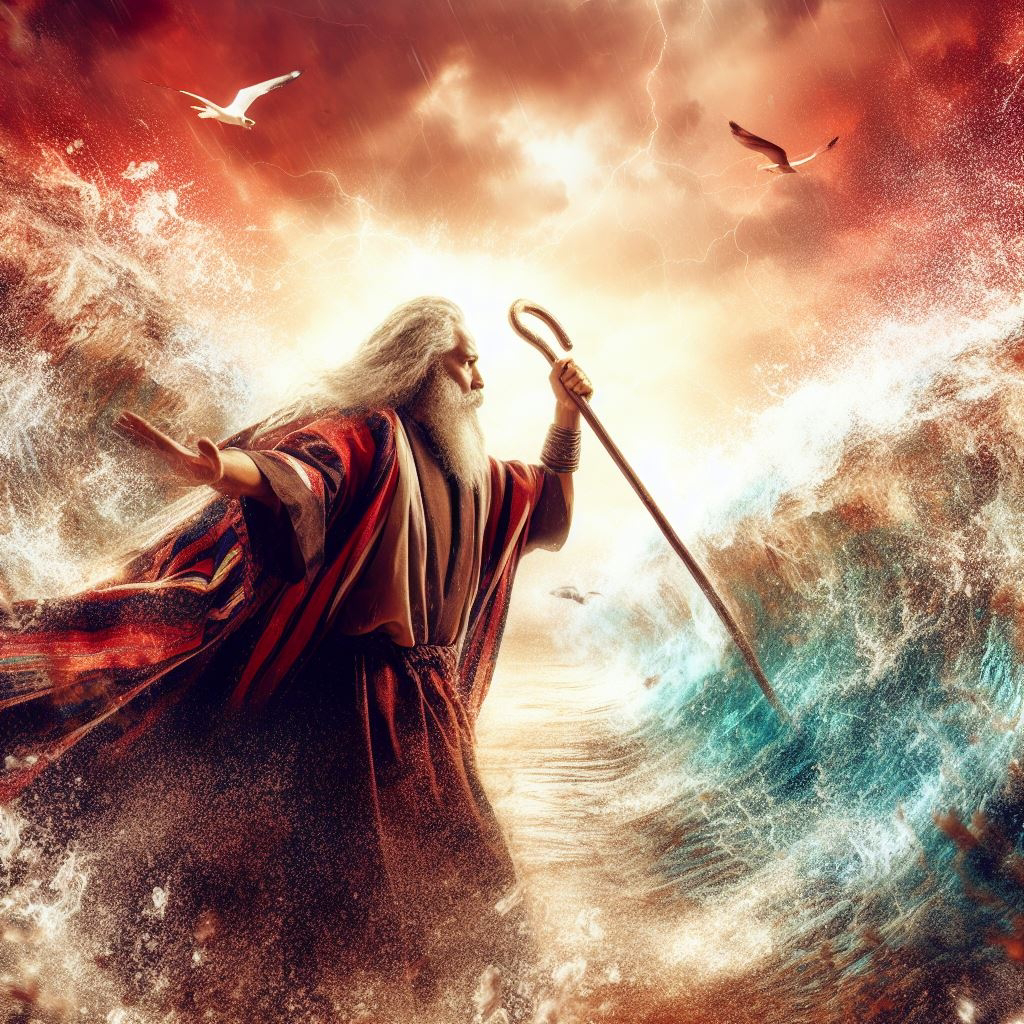
- No archaeological evidence supports the story of Moses crossing the Red Sea.
- The area's geography does not support the idea that Moses crossed the Red Sea. The Red Sea is a deep and comprehensive body of water, and it is unlikely that it could have been parted by a strong east wind, as described in Exodus 14:21.
- There is no historical record of such an event occurring. The Egyptians were meticulous record keepers, and yet there is no mention of such an event in their records.
 |
| The Red Sea's maximum width is 190 miles, and its deepest depth is 9,974 feet ( 3,040 meters), and its area is approximately 174,000 square miles (450,000 square km). |
"Yam Suph" (the Red Sea or Sea of Reeds?)
The 40-Year Biblical Exodus
The 40-year Exodus from the Torah is a story that describes how the Israelites left Egypt and wandered in the wilderness before entering the Promised Land. However, this story has been challenged by various scholars and critics who point out some problems with its historical accuracy and plausibility. Some of the issues are:
- No archaeological or textual evidence from Egypt or other sources corroborates the events of the Exodus, such as the ten plagues, the drowning of the Egyptian army, or the mass migration of many Israelites.
- The number of Israelites who left Egypt, according to the Torah, was around 600,000 men plus women and children, which would amount to several million people. This unrealistic figure would have been impossible to sustain in the desert or ancient Egypt.
- The Torah does not explain why the Israelites did not observe the Passover offering for 39 years in the desert, even though it was a central commandment that commemorated their liberation from slavery.
- The Torah does not explain why the Israelites had to wander for 40 years in the desert when the distance from Egypt to Canaan could have been covered in much less time. Some suggest it was a punishment for their lack of faith or a test of their obedience, but others find this unsatisfactory.
- The actual walk from Egypt to Canaan depends on the route, the speed, and the obstacles the travelers may encounter. According to some web search results, the most direct land route is about 160 miles (257 kilometers), and the total straight line distance is about 5270.8 miles (8482 kilometers), which is about 74 days (2 1/2 months) traveling on foot.
The eating of "Maana" for 40 years.
Fake Artifacts and the Dead Sea Scrolls

|
| The Dead Sea Scrolls are now deemed entirely fake. |
In 2020, a study commissioned by the Museum of the Bible in Washington, D.C., revealed that none of the textual fragments in the museum’s Dead Sea Scroll collection are authentic. The fragments, displayed since 2017, were found to be forgeries made from old shoe leather or other materials in the 20th century. They also include so-called pieces of the Book of Exodus.
Fraudulent artifacts bearing Hebrew inscriptions have been discovered in the past, and some have been used to promote a combined political, scientific, and religious agenda.
In addition to this, Israeli authorities have charged four antique collectors with creating a string of fraudulent Biblical artifacts. The announcement came as police and the Israel Antiquities Authority were ending a large-scale 18-month investigation into antiquities fraud.
The Center for the Future of Museums identified critical issues for museums to address in its TrendsWatch 2019 report. The report highlighted how fraudulent artifacts bearing Hebrew inscriptions were planted to promote a combined political, scientific, and religious agenda.
The Israel Stele
|
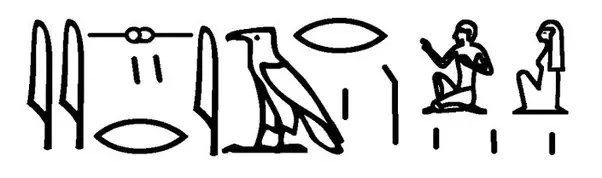
| A so-called singular instance of the word "Israel". Found nowhere else, and yet its biblical story is one of victory. |
- "Jezreel," a city and valley in northern Canaan;
- A continuation of the description of Libya referring to "wearers of the sidelock."
- The term 'Israel' on the stele does not refer to the Israelites of the Bible but to a group of nomadic invaders who were defeated by Merneptah. It claims that the hieroglyphic sign for 'people' is a variant of the 'foreign land' sign and that the determinative for 'country 'must be included. It also suggests that the name 'Israel' derives from a Canaanite god named El rather than the biblical patriarch Jacob.
- The conventional dating of the Exodus to the 13th century BCE is based on the assumption that Ramesses II was the pharaoh of the Exodus. It proposes that the Exodus occurred in the 15th century BCE, during the reign of Amenhotep II, and that Israel had already been established in Canaan by the time of Merneptah.
The Mesha Stele
 |
|
Is this Mesha Stele supposedly a replica of the original that was smashed beyond repair?
|
- The circumstances of its discovery are suspicious. The stele was reportedly found in 1868 by a Bedouin tribe in Dhiban, Jordan, among the ruins of an ancient city. However, the Bedouins did not inform the local authorities or any reputable archaeologist but tried to sell it to various European consuls and agents for a high price. The stele was also broken into pieces by the Bedouins, who claimed that they did so to prevent it from being stolen by rival tribes or foreigners. Some stele fragments were never recovered, and others were allegedly replaced by fakes.
- The content of the inscription needs to be consistent with other sources. The stele claims that King Mesha of Moab defeated the Israelites and conquered several towns, including Jericho (Qeriho). However, no archaeological evidence exists that Jericho was occupied or fortified in the 9th century BCE. The stele also mentions several gods and places not attested elsewhere in ancient sources.
- The language of the inscription is anomalous and anachronistic. The stele is written in ancient Hebrew, but it contains several linguistic features uncommon or unknown in other inscriptions from the same period. For example, the stele uses the definite article (ha-) before proper names, which is rare in Hebrew epigraphy. It also uses some words and expressions borrowed from later biblical Hebrew or influenced by Aramaic. Some scholars have suggested that the forger used a biblical text as a model for composing the inscription but made some mistakes or alterations to make it look more authentic.
The Ten Commandments Hollywood Movie
- The movie depicts Moses as growing up unaware of his Hebrew origins and having a romantic relationship with Nefretiri, an Egyptian princess. Moses knew his birth family and was nursed by his mother. He also married Zipporah, a Midianite woman, and had no Egyptian girlfriend.
- The movie names the pharaohs as Seti I and Ramses II, but the Bible does not specify their names. The film also confuses the historical roles of these pharaohs, as Seti I was the one who fought at Kadesh, not Ramses II.
- The movie shows Moses killing an Egyptian by strangling him, but according to the Jewish tradition, he killed him by uttering a divine name (Nu Pu Nuk!) that caused his soul to expire.
- The movie omits six of the ten plagues God sent upon Egypt and only briefly mentions them. The movie also does not show the role of Aaron, Moses's brother, who acted as his spokesman and performed many miracles.
- The movie portrays Moses as a charismatic leader and a powerful speaker, but the Bible says that he had a speech impediment and was reluctant to take on the mission.
These are just some examples of how the movie differs from the biblical and historical accounts of the Exodus. The film was influenced by the political and cultural context of the Cold War era and reflected the conservative views of its director, Cecil B. DeMille. It was not intended to be a faithful representation of the events but rather a dramatic and spectacular interpretation. Therefore, it should be taken as something other than a reliable source of information, but rather as entertainment and art.
Rameses II from the 10 Commandments movie and the Torah
- The biblical Exodus is traditionally dated to the 15th century B.C.E [1550 BC—Ahmose I becomes Pharaoh of Egypt], based on the mention of the city of Rameses in Exodus 1:11. However, this city was not built until the reign of Rameses II in the 13th century B.C.E., which suggests that the biblical text was updated to reflect the current name of the city.
- The biblical Exodus narrates a series of miraculous events that God performed to liberate the Israelites from the oppression of the Egyptians, such as the Ten Plagues, the splitting of the sea, the manna and quail, and the water from the rock. However, these events are not corroborated by any historical or natural sources, and they reflect the theological and literary perspectives of the biblical authors.
- The biblical Exodus claims that the Israelites encountered and defeated various peoples and kingdoms on their way to the Promised Land, such as the Amalekites, the Moabites, the Amorites, and the Canaanites. However, some of these peoples and kingdoms did not exist or were not in the region at the time of the Exodus. For example, the Moabites and the Ammonites emerged as distinct groups only in the 13th–12th centuries B.C.E. and the Canaanite city-states were controlled by the Egyptians until the late 12th century B.C.E.
The name Rameses in the Torah
The name "Ramses" (or "Raamses") is mentioned five times in the Bible. It appears in the context of the ancient city in Lower Egypt, which the Hebrews built as one of the treasury cities³. Here are the references:
- 1. Exodus 1:11 - The Hebrews built the cities of Pithom and Ramses.
- 2. Genesis 47:11 - Joseph settled his family in the land of Ramses.
- 3. Exodus 12:37 - The Israelites set out from Ramses to Succoth.
- 4. Numbers 33:3 - The Israelites departed from Ramses on the fifteenth day of the first month.
- 5. Numbers 33:5 - The Israelites left Ramses and camped at Succoth.
Conclusion:
|
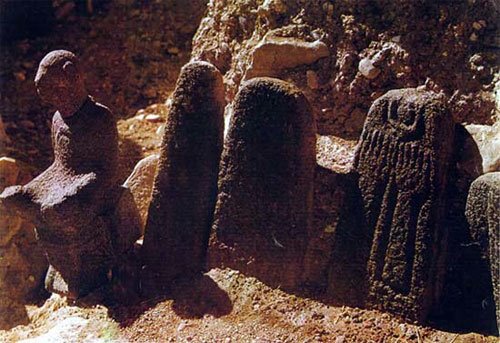
| Crescent Moon deity Yarikh, which eventually became known as YHWH |
The Errancy of Oral History
The 1st 5 books of Moses
(Deuteronomy 34:5 says Moses died, but the book continues for several verses..?)The first five books of the Bible, also known as the Torah or the Five Books of Moses, are traditionally believed to have been told by Moses himself around 1,300 B.C.E. The preservation of these books was initially done orally.


.png)

.png)








 Posts
Posts


